
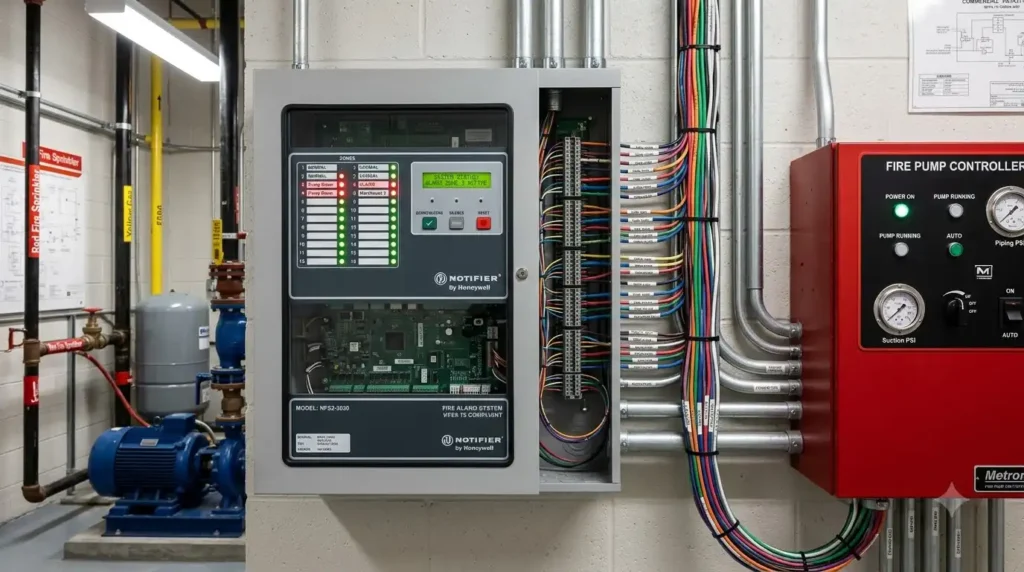
The word “automatic” in a fire alarm system gets used loosely by vendors, and buyers often assume it means the same thing across every quote they receive. It doesn’t. Some systems automatically sound a local alarm and stop there. Others automatically notify a monitoring station, activate fire pumps, release door magnets, and recall elevators — all without anyone touching a control. The gap between those two levels of automation matters enormously once an actual fire event happens.
This guide explains what an automatic fire alarm system in Hyderabad is actually supposed to do at each stage of response, how the automation logic works behind the scenes, and what to verify with a provider before assuming your system does more than it actually does.
This is where the real value of automation shows up — the panel automatically activating fire pumps, releasing fire doors, shutting down HVAC dampers to slow smoke spread, and recalling elevators to the ground floor so occupants don’t get trapped between floors during evacuation.
A system that only handles the first stage — detection and a local siren — is doing a fraction of what “automatic fire alarm system” implies. Buyers should confirm exactly which stages their system actually automates before assuming full coverage.
When a connected fire pump system detects a pressure drop from sprinkler activation, or receives a direct signal from the alarm panel, it starts automatically without requiring a human to flip a switch. This is engineered into the Fire Fighting Panel, which coordinates pump start sequences, monitors pressure, and reports pump status back to the central system.
The critical detail buyers often miss: pump activation logic needs to be tested regularly, not just installed once. A pump that hasn’t been function-tested in months carries real risk of failing to start exactly when it’s needed.
SM Electricals engineers Fire Fighting Panels that coordinate the full automatic response chain — detection, alarm activation, and automatic fire pump start — rather than stopping at a local siren. Based in Jeedimetla under CEO Mr. Saisudha Pamidimarri, the team configures automation logic around each facility’s actual layout and hazard profile, and supports the ongoing testing that keeps automatic response reliable years after installation.
If you’re evaluating whether your current system truly automates pump activation and notification, or only handles detection, a technical review can identify the gap before it matters in a real emergency. Explore the complete service range or view past installations in the gallery before requesting a consultation.
Transform your industrial electrical infrastructure with innovative, reliable, and customized solutions from SM Electricals. Our expert team is ready to help you achieve safer operations, better efficiency, and long-term performance.
Copyright © 2025 Smele. All rights reserved.Powered by Surya Digital Solutions.
WhatsApp us
