Industrial Electrical Solutions Provider in Hyderabad: What to Check Before You Sign

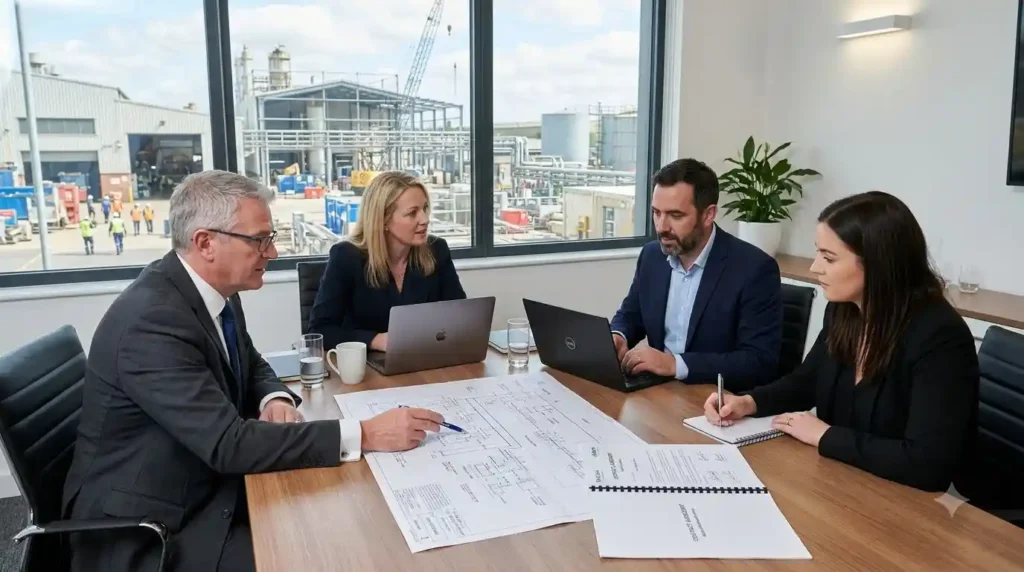
Industrial Electrical Solutions Provider in Hyderabad reviewing a technical proposal and contract with a client

By the time most facility managers realize a provider oversold their capability, the contract is already signed and the project is underway. Vetting an Industrial Electrical Solutions Provider in Hyderabad properly — before committing budget and timeline — catches most of these problems while they’re still cheap to walk away from.

This isn’t a list of what solutions should include. It’s a practical vetting process: the specific questions to ask, the documents to request, the contract terms to scrutinize, and the red flags that should make you keep looking, regardless of how good the sales pitch sounds.

Start with Verifiable Track Record, Not Marketing Claims

Ask for Project References You Can Actually Call

A provider’s website case studies are curated. Ask instead for two or three direct references from clients in your industry, and actually call them. Ask those references specifically about timeline accuracy, how the provider handled scope changes, and what happened the first time something went wrong after commissioning.

Request to See a Completed Project in Person

If a provider claims experience with facilities similar to yours, ask to visit one — or at minimum, see detailed photos and documentation from a comparable project. A provider confident in their work will accommodate this without hesitation.

Check How Long They've Actually Been Operating

New entrants aren’t automatically unreliable, but longevity in Hyderabad’s industrial sector tells you something about how they’ve handled the inevitable project disputes, warranty claims, and equipment failures that come with years in business.

Scrutinize the Technical Proposal, Not Just the Price

Does the Proposal Include a Real Load Assessment?

A generic quote that doesn’t reference your specific load data, facility layout, or process requirements is a red flag. A serious Industrial Electrical Solutions Provider in Hyderabad builds their proposal around your actual site conditions, not a template pulled from a previous client.

Are Component Brands Specified?

Vague line items like “circuit breakers” or “control panel” without named brands and models make it impossible to compare quotes accurately, and often signal the provider plans to substitute cheaper components later. Insist on a bill of materials with specific brands and model numbers.

Is There a Clear Scope Boundary?

Ambiguous scope is where cost overruns start. The proposal should clearly state what’s included — design, panel manufacturing, installation, commissioning, training, maintenance — and what triggers an additional charge.

Contract Terms That Matter More Than the Headline Price

Warranty Coverage

Check whether the warranty covers components, workmanship, or both, and for how long. Some providers offer generous component warranties but limited coverage on installation work — which is often where problems actually originate.

Service Level Agreements for Maintenance

If maintenance is part of the contract, get specific response-time commitments in writing. “Prompt support” means nothing without a stated number of hours for emergency response versus routine service requests.

Payment Milestones Tied to Deliverables

Payment schedules should align with verifiable milestones — drawing approval, factory acceptance testing, delivery, commissioning — not arbitrary calendar dates. This protects you if the project timeline shifts for reasons outside your control.

Penalty Clauses for Delay

Ask whether the contract includes any accountability for missed timelines. A provider unwilling to accept reasonable delay terms may be less confident in their own scheduling than their proposal suggests.

Change Order Process

Scope changes happen on almost every project. A clear, pre-agreed process for pricing and approving changes prevents disputes mid-project, when you have the least leverage to negotiate.

Red Flags That Should Make You Keep Looking

  • Reluctance to provide written references — legitimate providers welcome reference checks; hesitation here is worth noting.
  • Pressure to sign quickly — a provider pushing urgency without giving you time to review the contract is prioritizing their close rate over your due diligence.
  • No factory or fabrication facility to show you — if they can’t show you where the work actually happens, question who’s really doing the fabrication.
  • Vague answers about component sourcing — evasiveness here often means lower-quality substitutions later.
  • No documented testing process — a provider who can’t describe their factory acceptance testing procedure in detail likely doesn’t have a rigorous one.
  • Unusually low quotes with no clear explanation — if a quote is significantly below others, ask specifically what’s different in scope or component quality before assuming it’s simply a better deal.

Questions to Ask During the Evaluation Meeting

  1. Can you walk me through a project similar in scale to mine, from design through commissioning?
  2. What’s your factory acceptance testing process, and can I witness it?
  3. Which component brands do you use by default, and are substitutions ever made without client sign-off?
  4. What’s your documented response time for emergency maintenance calls?
  5. How do you handle scope changes once fabrication has started?
  6. Can you provide your compliance certifications and recent project references?
  7. What happens if my project timeline needs to shift — what does that cost, if anything?
A capable Industrial Electrical Solutions Provider in Hyderabad should answer these directly and specifically. Vague or deflective answers to any of them are worth taking seriously.

What a Well-Structured Proposal Looks Like

A proposal worth signing typically includes a site-specific load assessment, a detailed bill of materials with named components, a clear scope boundary between design, fabrication, installation, and maintenance, a realistic project timeline with milestones, and warranty and SLA terms spelled out rather than left to verbal assurance. If a proposal is missing several of these, ask for a revision before moving forward — the gaps in a proposal tend to become the disputes in a project.

Why Choose SM Electricals

SM Electricals structures every proposal around a genuine site assessment rather than a generic quote — with named component brands, a clear scope boundary across design, panel manufacturing, installation, and maintenance, and documented factory acceptance testing that clients are welcome to witness. Based in Jeedimetla under CEO Mr. Saisudha Pamidimarri, the team has worked with EPC contractors and facility owners across Hyderabad, Telangana, and Andhra Pradesh who’ve specifically asked for this level of transparency after a difficult experience with a previous vendor.

If you’re currently evaluating providers, ask to see a completed project in the gallery or review the service scope in detail before your next vendor meeting — it gives you a useful benchmark for comparing proposals.

Common Mistakes Buyers Make During Vendor Evaluation

  1. Comparing quotes without comparing scope — a lower number often means less is actually included.
  2. Skipping reference calls — reading a case study isn’t the same as hearing directly from a past client about how problems were handled.
  3. Accepting verbal assurances instead of written terms — warranty and SLA commitments that aren’t in the contract aren’t enforceable.
  4. Rushing the decision under sales pressure — a rushed evaluation is where the most expensive mistakes get made.
  5. Not asking about component substitution rights — without this in writing, a provider can swap specified brands without your knowledge.

Expert Tips

  • Build a simple comparison sheet across every provider you evaluate — scope, components, warranty, SLA, and timeline — so you’re comparing like for like, not just headline price.
  • Always call at least one reference directly, even if it feels like an extra step.
  • Get every verbal commitment written into the contract before signing, especially around response times and component brands.
  • Ask what happens contractually if the provider misses a committed milestone.
  • Keep the evaluation process the same length regardless of how good any single pitch feels — rushing favors the provider, not you.

Questions

Three is generally enough to compare scope, pricing structure, and communication style without dragging the decision out unnecessarily.
Warranty coverage and maintenance SLA terms matter most, since these determine what happens after commissioning, when problems are most likely to surface.
Not necessarily — check whether their references are actually relevant to your industry and project scale, not just how many they can list.
Yes, and a provider unwilling to discuss reasonable terms around payment milestones, warranty, or delay accountability is worth reconsidering.
Ask for compliance certifications, a detailed bill of materials, a factory acceptance testing procedure, and written SLA terms for any maintenance included.
Visit their facility if possible, or request detailed photos and documentation from a comparable completed project.
A well-structured contract includes a change order process that defines how scope changes get priced and approved, avoiding disputes later.
Yes, SM Electricals documents response-time commitments and scope details in writing as part of any maintenance agreement.

Conclusion

Choosing an Industrial Electrical Solutions Provider in Hyderabad comes down to due diligence most buyers skip under time pressure — checking references, scrutinizing the technical proposal, and getting warranty and SLA terms in writing before signing. The providers who welcome this scrutiny are usually the ones worth working with.

Call-To-Action

Currently evaluating providers for an upcoming project? Request a detailed proposal from SM Electricals to use as a benchmark, or review the complete service scope and more engineering guides on the blog.
Call Now Button