Automatic Fire Alarm System in Hyderabad: How It Actually Responds

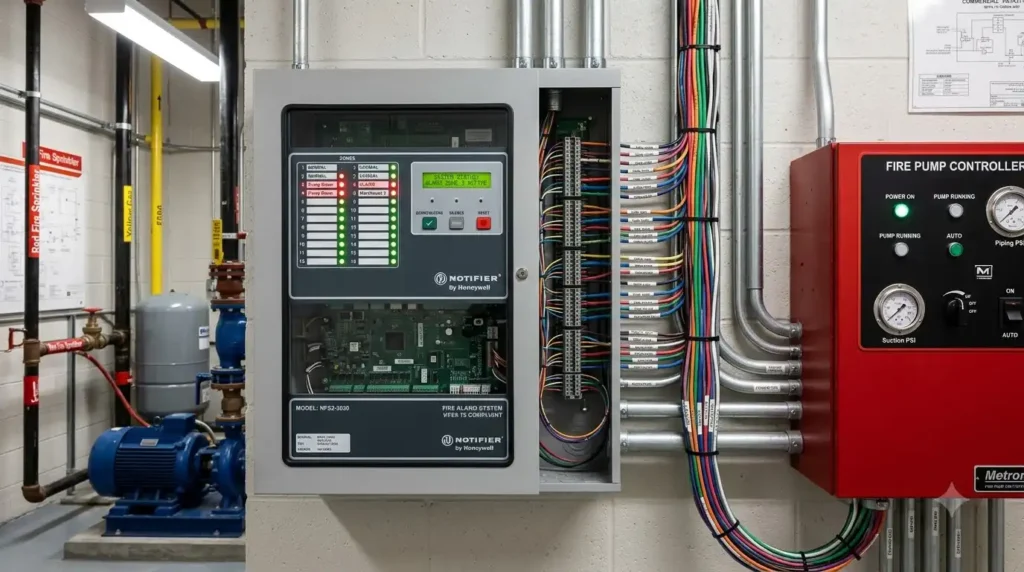
Automatic fire alarm system in Hyderabad control panel coordinating detection and fire pump activation

The word “automatic” in a fire alarm system gets used loosely by vendors, and buyers often assume it means the same thing across every quote they receive. It doesn’t. Some systems automatically sound a local alarm and stop there. Others automatically notify a monitoring station, activate fire pumps, release door magnets, and recall elevators — all without anyone touching a control. The gap between those two levels of automation matters enormously once an actual fire event happens.

This guide explains what an automatic fire alarm system in Hyderabad is actually supposed to do at each stage of response, how the automation logic works behind the scenes, and what to verify with a provider before assuming your system does more than it actually does.

What "Automatic" Should Mean in a Fire Alarm System

Automatic Detection

Smoke and heat sensors continuously monitor their zone and report to the control panel without requiring manual observation. This is the baseline every fire alarm system provides, automatic or not.

Automatic Verification

More advanced systems use cross-zone or multi-sensor verification before triggering a full alarm — requiring signals from two detectors, or a detector plus a rise in temperature, before escalating to a building-wide alert. This reduces false alarms triggered by dust, steam, or a single malfunctioning sensor, which matters because false alarms erode occupant trust in the system over time.

Automatic Notification

A genuinely automatic system doesn’t rely on someone noticing the alarm and calling for help. It transmits a signal directly to a monitoring station or the fire department, cutting the delay between detection and emergency response.

Automatic System Response

This is where the real value of automation shows up — the panel automatically activating fire pumps, releasing fire doors, shutting down HVAC dampers to slow smoke spread, and recalling elevators to the ground floor so occupants don’t get trapped between floors during evacuation.

A system that only handles the first stage — detection and a local siren — is doing a fraction of what “automatic fire alarm system” implies. Buyers should confirm exactly which stages their system actually automates before assuming full coverage.

How Automatic Detection Technology Works

Ionization and Photoelectric Sensors

Ionization sensors respond quickly to fast, flaming fires, while photoelectric sensors are more sensitive to smoldering fires that produce visible smoke before flame. Facilities often use a mix of both across different zones, matched to the fire risk profile of each area.

Heat Detectors

In areas prone to dust, steam, or cooking fumes — kitchens, certain industrial processes — heat detectors reduce false alarms that smoke detectors would otherwise trigger, responding instead to a genuine temperature rise.

Addressable Sensing

In an addressable system, each detector reports its exact identity to the panel rather than just its zone, which is what allows automatic notification systems to relay precise location data to responders instead of a general area.

How Automatic Fire Pump Activation Works

When a connected fire pump system detects a pressure drop from sprinkler activation, or receives a direct signal from the alarm panel, it starts automatically without requiring a human to flip a switch. This is engineered into the Fire Fighting Panel, which coordinates pump start sequences, monitors pressure, and reports pump status back to the central system.

The critical detail buyers often miss: pump activation logic needs to be tested regularly, not just installed once. A pump that hasn’t been function-tested in months carries real risk of failing to start exactly when it’s needed.

Reducing False Alarms Without Compromising Detection Speed

False alarms are the most common complaint facility managers have about automatic fire alarm systems, and they’re also the biggest threat to a system’s long-term credibility — occupants who’ve been through several false evacuations start ignoring real alarms. Effective false-alarm reduction comes from:
  • Matching detector type to environment — heat detectors in dusty or steamy zones, photoelectric or ionization in clean office space
  • Cross-zone verification logic, requiring confirmation from a second signal before full building alert
  • Regular sensor cleaning and calibration, since dust accumulation is one of the most common causes of nuisance alarms
  • Proper detector placement, avoiding locations near HVAC vents or areas with frequent steam or smoke from legitimate activity
A provider who can explain their approach to false-alarm reduction in specific technical terms — not just “our systems are reliable” — is worth trusting more than one who can’t.

What to Verify Before Trusting Your System's Automation

  1. Does the system automatically notify a monitoring station, or only sound a local alarm? Get this in writing, not as a verbal assumption.
  2. Is pump activation automatic or does it require manual start? Confirm this specifically if your facility has a connected fire pump.
  3. What’s the false-alarm verification logic? Ask whether the system uses cross-zone confirmation or single-detector triggering.
  4. How often is automatic pump and alarm response function-tested? A testing schedule should be documented, not assumed.
  5. Does the system integrate with elevator recall and HVAC shutdown? These are common gaps in systems marketed as “automatic” that only handle detection and notification.
  6. What happens during a power outage? Confirm battery backup covers the full automatic response chain, not just the detection sensors.

Where Automatic Systems Matter Most

Unoccupied or Low-Occupancy Hours

Warehouses, server rooms, and facilities running reduced night shifts depend heavily on automatic notification, since there may be no one present to notice a local alarm and call for help manually.

Multi-Floor Commercial and Industrial Buildings

Automatic elevator recall and zone-specific notification save critical time in larger buildings where manual coordination during an evacuation is inherently slower and more error-prone.

Facilities with Connected Fire Pumps

Automatic pump activation removes the dependency on a person recognizing the emergency and manually starting suppression — a dependency that becomes dangerous during off-hours or in fast-developing fire situations.

Common Mistakes Buyers Make

  1. Assuming “automatic” covers the full response chain — many systems only automate detection and local alarm, not pump activation or monitoring station notification.
  2. Skipping regular function testing — automation only works if it’s verified to actually work, not just installed and left alone.
  3. Ignoring false-alarm patterns — repeated nuisance alarms usually signal a detector placement or type mismatch that needs correcting, not something to tolerate indefinitely.
  4. Not confirming battery backup covers the full system — some installations only back up detection, leaving pump activation vulnerable during a power outage.
  5. Choosing based on panel price alone — the sophistication of the automation logic matters more than the panel’s sticker price for actual life-safety performance.

Expert Tips

  • Ask your provider for a written description of exactly which stages of response are automated in your specific system.
  • Request a documented false-alarm reduction strategy tailored to your facility’s environment, not a generic answer.
  • Schedule function testing of automatic pump activation at least quarterly, with results logged for compliance records.
  • If your facility has elevators, confirm recall integration explicitly — it’s a common gap that’s easy to overlook during initial installation.
  • Revisit your system’s automation coverage any time you renovate or change how a space is used, since detector placement decisions made years ago may no longer fit.

Why Choose SM Electricals

SM Electricals engineers Fire Fighting Panels that coordinate the full automatic response chain — detection, alarm activation, and automatic fire pump start — rather than stopping at a local siren. Based in Jeedimetla under CEO Mr. Saisudha Pamidimarri, the team configures automation logic around each facility’s actual layout and hazard profile, and supports the ongoing testing that keeps automatic response reliable years after installation.

If you’re evaluating whether your current system truly automates pump activation and notification, or only handles detection, a technical review can identify the gap before it matters in a real emergency. Explore the complete service range or view past installations in the gallery before requesting a consultation.

Latest Trends in Automatic Fire Alarm Technology

  • AI-assisted false-alarm filtering, using pattern recognition to distinguish genuine fire signatures from nuisance triggers
  • Cloud-connected monitoring, giving facility managers remote visibility into system status and automatic test logs
  • Integration with building automation systems, so fire response coordinates automatically with HVAC, access control, and elevator systems
  • Predictive maintenance alerts, flagging detectors likely to need cleaning or replacement before they cause a false alarm
  • Faster monitoring station connectivity, reducing the delay between automatic detection and emergency service dispatch

Questions

It can mean anything from automatic local alarm sounding to full automatic notification, pump activation, and building system integration — buyers need to confirm which stages their specific system covers.
No. Manual pull stations remain an important backup, allowing occupants to trigger an alarm immediately if they spot a fire before automated detection responds.
The pump control system detects a pressure drop or receives a direct signal from the alarm panel and starts automatically, without requiring manual intervention.
Common causes include dust accumulation, steam or cooking fumes near sensitive detectors, or a mismatch between detector type and the environment it's installed in.
Yes, when connected to a monitoring station, the system can transmit an automatic signal for emergency dispatch without requiring a phone call from building occupants.
Quarterly function testing of detection, notification, and pump activation is a reasonable minimum for maintaining reliable automatic response.
Fully automated systems typically cost more upfront than basic detection-only setups, but the faster response and reduced reliance on manual intervention often justify the investment for facilities with real fire risk exposure.
In many cases yes, particularly if the existing panel and wiring infrastructure can support additional automation modules — a site assessment determines feasibility.

Conclusion

An automatic fire alarm system in Hyderabad is only as good as the stages of response it actually automates. Detection alone isn’t enough — verify that notification, pump activation, and building system integration are genuinely automatic, tested regularly, and documented, rather than assuming the word “automatic” on a proposal covers all of it.

Call-To-Action

Want to confirm exactly what your fire alarm system automates? Talk to SM Electricals about a technical review, or explore the Fire Fighting Panel range and more engineering guides on the blog.
Call Now Button