
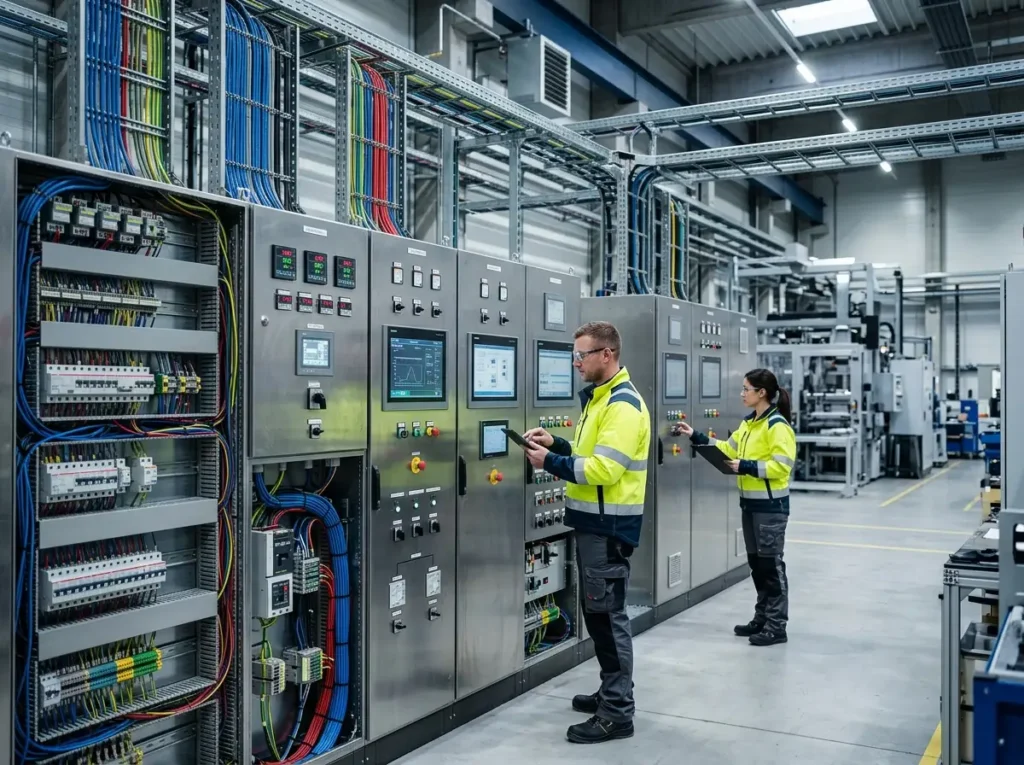
Industrial growth today is completely dependent on how efficiently electrical systems are designed and managed inside a facility. Machines alone do not guarantee productivity; the real performance depends on how well the industrial control panel systems coordinate power distribution, automation, protection, and monitoring. SM Electricals focuses on delivering advanced-level solutions that are designed for real industrial environments where load variation, downtime risk, and energy efficiency are constant challenges.
Most industries still operate with outdated or partially optimized systems, which creates hidden losses in power consumption, maintenance cost, and production downtime. An advanced electrical control system is not just an upgrade it is a structural improvement in how the entire plant operates. This blog explains how modern industrial control panel systems are transforming industrial performance and why SM Electricals solutions are becoming essential in Hyderabad’s growing industrial sector.
Industrial control panels act as the central nervous system of any manufacturing or processing unit. They control motors, regulate power flow, protect electrical equipment, and ensure safe operation across multiple machines. Without a properly designed control system, industries face instability, frequent breakdowns, and inefficient power usage.
A basic system only distributes electricity, but an advanced industrial control panel system manages logic, automation, and energy efficiency together. This is where the difference becomes critical for industrial performance.
For example, in a poorly designed system, motors may continue running at full load even when demand is low, causing unnecessary energy consumption. In contrast, an advanced system automatically adjusts load distribution based on real-time requirements, reducing wastage significantly.
Another example is fault handling. In traditional setups, faults are identified only after a breakdown occurs. However, advanced systems detect irregularities in voltage or current patterns early and isolate the issue before it spreads to other components. This prevents large-scale downtime and equipment damage.
Automation is a key component in modern industrial control panel systems. It removes dependency on manual switching and introduces precision-based control across all electrical operations. Industries that implement automation experience higher efficiency, lower error rates, and improved operational safety.
In manufacturing plants, automated control systems manage conveyor speeds, motor synchronization, and production timing without manual intervention. This ensures consistent output quality and reduces human error.
For example, in a packaging unit, an automated system can adjust conveyor speed based on product flow. If the production load increases, the system automatically balances motor speed to avoid congestion. Similarly, in water treatment facilities, pumps are controlled through sensor-based automation that activates or deactivates motors depending on water level conditions.
Another example is fault response automation. When abnormal conditions like overload or overheating are detected, the system immediately isolates the affected section and triggers alarms. This rapid response prevents damage and ensures operational continuity.
Energy efficiency is one of the most critical concerns in industrial operations. Poor power factor leads to energy losses, higher electricity bills, and penalties from utility providers. This is where APFC (Automatic Power Factor Correction) panels play a major role in modern industrial control panel systems.
APFC systems continuously monitor reactive power and automatically adjust capacitor banks to maintain an optimal power factor. This ensures that electrical systems operate efficiently without unnecessary energy loss.
For example, in heavy machinery industries, large motors often draw reactive power, which reduces system efficiency. APFC panels correct this imbalance in real time, improving energy utilization and reducing monthly electricity costs.
Another example is transformer efficiency. When power factor is optimized, transformers can handle more load without requiring upgrades. This extends equipment life and reduces infrastructure investment costs.
Motor operations are central to most industries, and efficient motor management is essential for productivity. MCC (Motor Control Center) and PMCC (Power Motor Control Center) systems are designed to manage multiple motors in a structured and efficient way.
MCC systems allow centralized control of motors used in production lines, pumps, compressors, and conveyors. Instead of managing each motor individually, operators can control everything from a single structured panel.
For example, in a manufacturing plant, MCC panels allow operators to start, stop, and monitor multiple machines simultaneously. If one motor fails, the system isolates it without affecting the entire production line.
PMCC systems take this further by integrating power distribution and motor control in a single unit. This reduces wiring complexity, saves space, and improves system coordination.
For example, in industrial plants with mixed loads such as lighting, motors, and HVAC systems, PMCC panels provide unified control, improving efficiency and reducing installation cost.
Industrial downtime caused by power failure can lead to significant financial losses. AMF (Automatic Mains Failure) panels ensure uninterrupted operations by switching power sources automatically.
When the main power supply fails, AMF systems instantly activate generator backup without manual intervention. This ensures continuous operation of critical systems.
For example, in pharmaceutical industries, production processes cannot be interrupted even for a few minutes. AMF systems ensure seamless transition between main power and backup generators.
Another example is data centers and processing units where system shutdown can result in data loss or corruption. AMF panels maintain continuous power flow, ensuring system stability and data protection.
Safety is one of the most important aspects of industrial control panel systems. Advanced panels are designed with multiple layers of protection including overload protection, short circuit protection, and thermal monitoring.
For example, if a short circuit occurs in one section of the system, protective relays immediately isolate the fault area to prevent damage to other components. This avoids large-scale system failure.
Another example is overload protection. When a motor draws excessive current, the system automatically reduces load or shuts down the affected unit to prevent overheating and equipment damage.
These safety mechanisms ensure long-term reliability and reduce maintenance costs significantly.
Modern industrial systems are moving toward real-time monitoring and smart diagnostics. Instead of waiting for failures, industries now rely on continuous data tracking.
For example, energy monitoring systems provide real-time data on power consumption, helping industries identify inefficient areas and optimize usage.
Another example is predictive fault detection. Sensors continuously analyze voltage, temperature, and load variations. If abnormal patterns are detected, alerts are generated before actual failure occurs.
This proactive approach reduces downtime and improves operational planning.
Maintenance strategies have evolved from reactive to predictive systems. In traditional setups, maintenance is performed after a breakdown occurs, which leads to downtime and production loss.
In advanced industrial control panel systems, predictive maintenance identifies issues before they become failures.
For example, thermal sensors can detect rising temperature trends in electrical components, indicating potential overload conditions. Maintenance teams can replace components before breakdown occurs.
Another example is contactor wear monitoring. Instead of waiting for failure, the system tracks usage cycles and recommends replacement at the right time.
Investing in advanced control systems is not just a technical decision—it is a financial strategy. Efficient industrial control panel systems reduce operational cost, improve productivity, and extend equipment lifespan.
For example, energy optimization through APFC panels reduces monthly electricity bills consistently over time. Even small improvements in power factor result in significant long-term savings.
Another example is downtime prevention. Avoiding even one major production shutdown can save substantial financial losses, making the investment highly valuable.
Modern industries cannot rely on outdated electrical infrastructure if they want sustainable growth. Advanced industrial control panel systems are essential for automation, safety, energy efficiency, and operational stability.
SM Electricals focuses on delivering engineered solutions that combine APFC, MCC, AMF, and PMCC systems into reliable industrial architectures. These systems are designed not just to operate machines, but to optimize entire industrial performance.
The future of industrial operations depends on smart, automated, and efficient control systems, and industries that adopt them early will always stay ahead in productivity and cost control.
Industrial control panel systems are electrical setups that manage, control, and protect machines, motors, and power distribution to ensure safe and efficient industrial operations.
They improve automation, reduce downtime, enhance safety, and optimize energy usage, which helps industries operate more efficiently and reliably.
APFC panels correct power factor automatically, reduce reactive power loss, and help lower electricity bills while improving overall energy efficiency.
MCC and PMCC systems manage multiple motors and power loads from a single control unit, improving coordination, reducing wiring complexity, and increasing operational control.
They detect faults like overloads or short circuits early, isolate issues quickly, and use predictive maintenance to prevent breakdowns before they happen.
Transform your industrial electrical infrastructure with innovative, reliable, and customized solutions from SM Electricals. Our expert team is ready to help you achieve safer operations, better efficiency, and long-term performance.
Copyright © 2025 Smele. All rights reserved.Powered by Surya Digital Solutions.
WhatsApp us
