
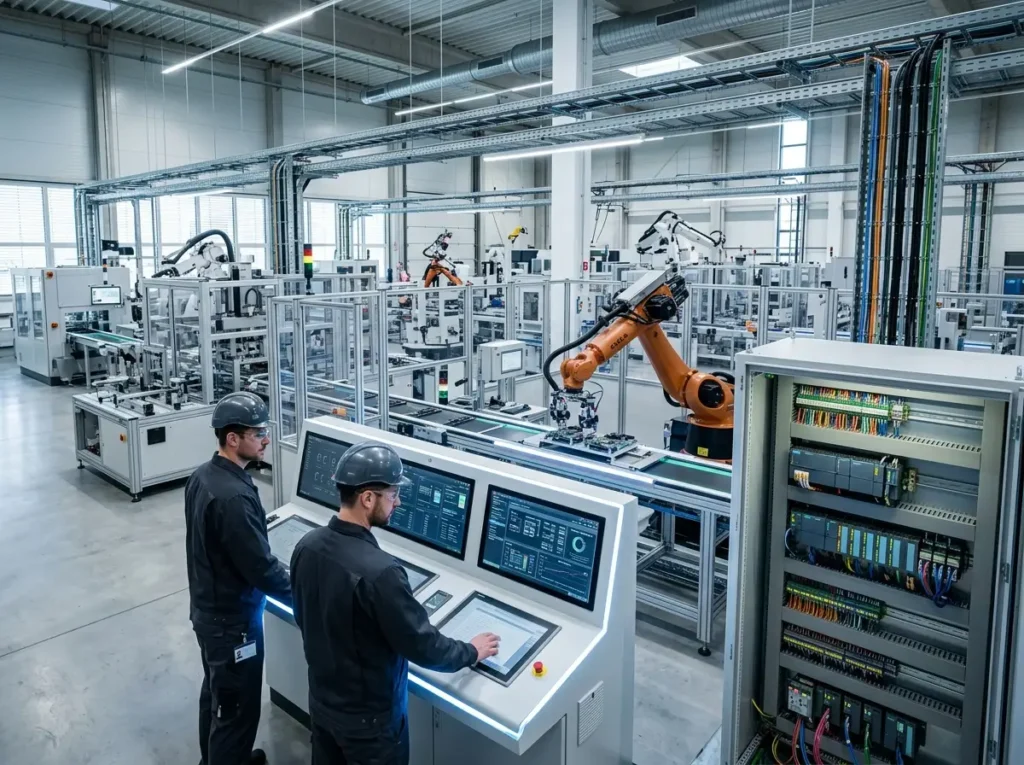
Modern industries are shifting rapidly from traditional electrical setups to intelligent systems that can self-monitor, self-correct, and optimize performance in real time. This shift is driven by the demand for higher efficiency, lower operational cost, and improved safety. In this transformation, smart industrial automation systems play a major role by integrating electrical engineering with digital intelligence.
SM Electricals focuses on designing and implementing industrial automation systems that are not just functional but also intelligent. These systems reduce manual dependency, improve production consistency, and ensure that industries operate with maximum efficiency and minimum downtime.
Unlike conventional setups where human intervention is required for every control action, modern systems operate through sensors, controllers, and automated logic. This reduces errors and improves operational speed significantly.
Earlier industrial environments depended heavily on manual switching and basic control panels. These systems were limited in functionality and could only perform basic ON/OFF operations. However, as industries expanded, these traditional systems became inefficient and unreliable.
Today’s smart industrial automation systems are completely different. They combine electrical infrastructure with digital control systems such as PLCs, IoT modules, and real-time monitoring tools.
For example, in older systems, a motor would continue running even when production demand decreased, leading to energy waste. In modern systems, automation logic detects load variations and adjusts motor performance automatically.
Another example is fault detection. Traditional systems only indicate failure after breakdown occurs. In contrast, advanced systems continuously monitor voltage, temperature, and vibration levels to predict issues before failure happens.
This evolution has completely changed how industries operate and manage resources.
The integration of IoT has made industrial automation systems more intelligent and connected. IoT allows machines, sensors, and control panels to communicate with each other in real time.
Each device in the system collects operational data and transmits it to a centralized monitoring platform. This enables continuous analysis of system performance.
For example, in a manufacturing plant, IoT sensors track motor temperature and energy consumption. If abnormal patterns are detected, alerts are generated immediately, allowing engineers to take preventive action.
Another example is remote monitoring. Industrial managers can access system performance data from mobile devices or control dashboards without being physically present on-site. This improves decision-making speed and reduces operational delays.
IoT also helps in tracking energy efficiency, allowing industries to identify high-consumption machines and optimize usage accordingly.
One of the biggest advantages of modern smart industrial automation systems is energy optimization. Energy wastage is a major issue in industrial environments, often caused by inefficient load management and outdated systems.
Automation systems help reduce this waste by balancing load distribution and controlling energy usage intelligently.
For example, during low production hours, the system automatically reduces non-essential machine operations. This ensures that energy is not wasted unnecessarily.
Another example is peak load management. When energy demand increases, the system redistributes load across different units to prevent overload and reduce electricity penalties.
Integration of APFC systems also improves power factor, reducing reactive power loss and lowering electricity bills significantly. This makes energy usage more efficient and cost-effective.
Maintenance is one of the most critical aspects of industrial operations. Traditional maintenance systems are reactive, meaning problems are fixed only after failure occurs. This approach leads to downtime and financial loss.
In contrast, smart industrial automation systems use predictive maintenance techniques.
For example, vibration sensors installed in motors continuously monitor machine behavior. If abnormal vibration levels are detected, the system generates early warnings before breakdown occurs.
Another example is thermal monitoring. If temperature levels in electrical panels rise beyond safe limits, the system automatically triggers alerts or reduces load to prevent damage.
This predictive approach ensures that industries can avoid unexpected failures and maintain continuous operations.
Safety is a top priority in any industrial environment. Advanced industrial automation systems significantly improve safety by reducing human intervention in critical operations.
For example, in overload situations, the system automatically isolates affected circuits before damage spreads. This prevents equipment failure and reduces fire hazards. Another example is short circuit protection. Instead of manual response, automation systems instantly detect faults and disconnect power to prevent accidents. These automated safety mechanisms ensure that industrial environments remain secure and stable even under heavy operational loads.
Real-time monitoring is one of the strongest features of modern automation systems. It provides continuous visibility into system performance and operational health.
For example, energy monitoring dashboards display real-time consumption data for each machine. This helps industries identify inefficiencies and optimize usage patterns.
Another example is production tracking. Managers can monitor machine output in real time and detect bottlenecks immediately.
This level of transparency was not possible in traditional systems. Now, industries can make faster and more accurate decisions based on live data.
Smart control panels act as the central hub in industrial automation systems. They integrate sensors, controllers, and communication modules into a unified structure.
For example, in a production unit, smart panels control multiple machines simultaneously while ensuring synchronized operation.
Another example is process coordination. Machines are automatically adjusted to maintain smooth production flow without manual coordination.
These panels reduce dependency on human operators and improve system reliability significantly.
Investing in smart industrial automation systems provides long-term financial benefits. Although initial setup costs may be higher, the return on investment is significantly greater.
For example, energy optimization through automation reduces monthly electricity costs consistently over time.
Another example is downtime reduction. Preventing even a few hours of production loss can save significant financial losses in high-output industries.
These systems also reduce maintenance costs by identifying issues early and preventing major breakdowns.
The future of industrial automation is moving toward AI-driven and fully autonomous systems. Artificial intelligence will play a major role in decision-making processes within industrial environments.
For example, AI-based systems will predict machine failures more accurately by analyzing historical performance data.
Another example is adaptive production systems that automatically adjust output based on demand fluctuations.
As industries continue to evolve, smart industrial automation systems will become the foundation of all modern manufacturing and processing units.
The transformation from traditional electrical systems to smart industrial automation systems is not just a technological upgrade, it is a necessity for modern industries. These systems improve efficiency, enhance safety, reduce costs, and provide real-time control over industrial operations.
SM Electricals focuses on delivering advanced automation solutions that integrate IoT, predictive maintenance, energy optimization, and smart control systems into a unified industrial framework.
Industries that adopt automation today are not just improving operations they are securing their future competitiveness in a highly demanding industrial environment.
Smart industrial automation systems are advanced setups that use sensors, controllers, and software to automatically manage machines, improve efficiency, and reduce manual work in industries.
They optimize machine performance, reduce energy waste, and balance load distribution automatically, which increases productivity and reduces operational cost.
IoT connects machines and sensors to a central system, allowing real-time monitoring, remote control, and instant alerts for better decision-making.
Predictive maintenance uses sensors to detect early signs of failure like heat, vibration, or load changes, helping prevent breakdowns before they occur.
Yes, they automatically detect faults like overloads or short circuits and isolate problems quickly to prevent damage and improve overall safety.
Transform your industrial electrical infrastructure with innovative, reliable, and customized solutions from SM Electricals. Our expert team is ready to help you achieve safer operations, better efficiency, and long-term performance.
Copyright © 2025 Smele. All rights reserved.Powered by Surya Digital Solutions.
WhatsApp us
