
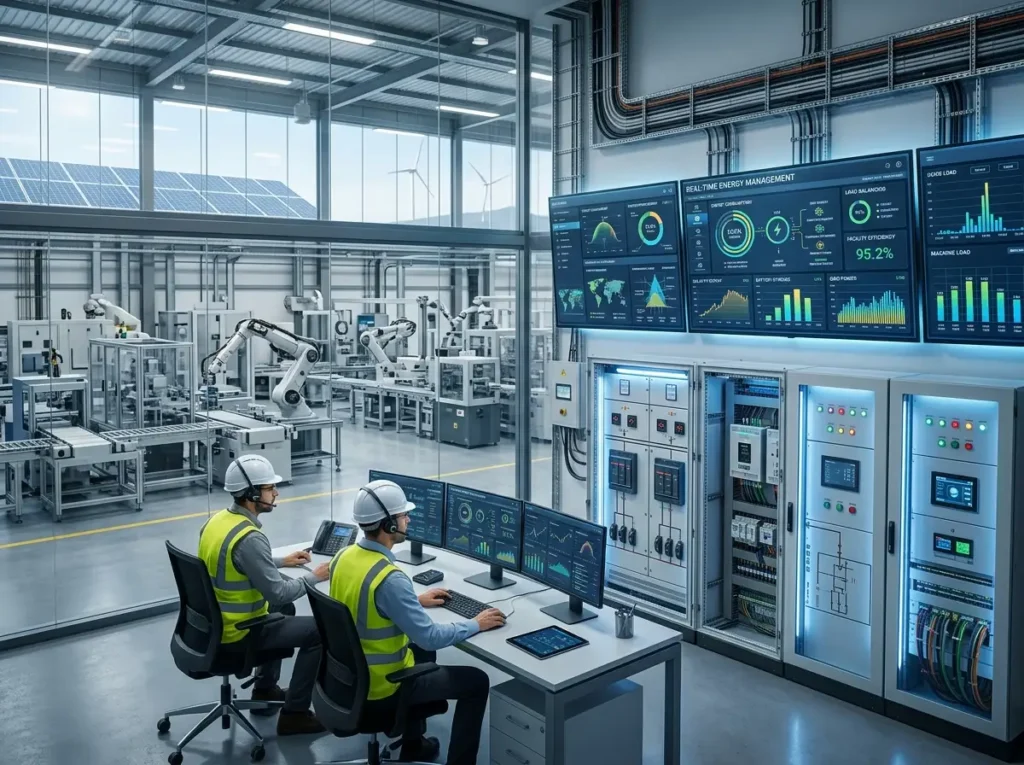
Industrial electricity consumption continues to increase as production facilities expand and automation becomes more advanced. While industries invest heavily in machinery, automation equipment, and infrastructure, many still struggle to understand exactly where energy is being consumed and how much of it is being wasted. This lack of visibility often leads to higher operational costs, inefficient resource utilization, and unnecessary pressure on electrical infrastructure.
Modern industries are now moving beyond traditional power distribution and entering a new phase of intelligent energy management. This transition is driven by the need for better efficiency, sustainability, and operational control. A Smart Energy Management System is designed to provide industries with complete visibility into their energy consumption patterns while enabling real-time decision-making that improves efficiency and reduces waste.
For industrial facilities, energy management is no longer limited to tracking monthly electricity bills. It now involves continuous monitoring, advanced analytics, load optimization, demand forecasting, and automated energy control. Through intelligent monitoring and data-driven insights, industries can identify hidden inefficiencies and implement corrective actions before they affect productivity.
SM Electricals helps industries adopt advanced Smart Energy Management Systems that integrate with existing electrical infrastructure and provide comprehensive energy intelligence. These solutions empower businesses to make informed decisions while improving operational efficiency and long-term profitability.
Industrial facilities consume power across multiple systems, including production machinery, HVAC equipment, lighting networks, motor-driven applications, compressors, and automation systems. As operations become more complex, tracking energy consumption manually becomes almost impossible.
Many industries receive electricity bills every month but lack detailed information about which systems are responsible for the highest energy consumption. Without accurate data, reducing energy costs becomes a guessing game.
A Smart Energy Management System addresses this challenge by providing detailed insights into energy usage across different departments, machines, and operational processes. Instead of relying solely on monthly reports, facility managers gain access to real-time information that supports faster and more accurate decision-making.
For example, a manufacturing facility may discover through energy analytics that specific production lines consume significantly more power than expected. This information allows engineers to investigate the cause and implement improvements.
Similarly, an industrial plant may identify equipment that continues consuming energy during non-production hours. By correcting these inefficiencies, organizations can reduce unnecessary electricity expenses without affecting productivity.
One of the most valuable features of a Smart Energy Management System is real-time monitoring. Traditional approaches often rely on historical data that becomes available only after energy has already been consumed.
Real-time monitoring changes this approach completely by providing instant visibility into power consumption, voltage levels, current flow, power factor performance, and equipment load conditions.
For example, if a sudden spike in energy consumption occurs, facility managers can immediately identify the source and investigate the issue. This rapid response helps prevent waste and improves operational control.
Another advantage involves monitoring critical equipment. High-energy-consuming machines can be tracked continuously, allowing operators to evaluate performance and identify inefficiencies before they become major problems.
This level of visibility transforms energy management from a reactive process into a proactive strategy.
Electrical demand charges often represent a significant portion of industrial energy expenses. Many organizations focus solely on reducing overall consumption while overlooking demand-related costs.
A Smart Energy Management System helps industries optimize electrical loads and manage peak demand more effectively.
During periods of high consumption, intelligent systems can identify non-essential loads and recommend adjustments that reduce peak demand levels. This prevents unnecessary demand charges while maintaining operational stability.
For example, certain equipment can be scheduled to operate during off-peak hours when electricity demand is lower. This strategy helps distribute energy consumption more evenly throughout the day.
Similarly, intelligent load balancing prevents excessive stress on transformers, generators, and distribution systems, improving overall infrastructure performance.
Energy efficiency is not only about reducing consumption. Power quality also plays a critical role in industrial performance.
Poor power quality can lead to equipment failures, production interruptions, overheating, and increased maintenance costs. Voltage fluctuations, harmonics, and power factor issues often remain undetected until they cause significant operational problems.
A Smart Energy Management System continuously monitors power quality parameters and provides actionable insights.
For example, harmonic distortion generated by variable frequency drives and electronic equipment can negatively impact electrical systems. Monitoring tools identify these conditions and help engineers implement corrective measures.
Similarly, continuous power factor analysis supports the effective operation of APFC systems, ensuring that industries maintain optimal efficiency while avoiding utility penalties.
Data is one of the most valuable resources available to modern industries. However, raw data alone provides little value without proper analysis.
Advanced Smart Energy Management Systems convert energy data into meaningful insights through analytics and reporting tools.
These systems identify trends, highlight inefficiencies, and support strategic planning initiatives. Instead of simply measuring energy consumption, they explain why consumption patterns occur and what actions can improve performance.
For example, analytics may reveal that specific production shifts consume more energy than others despite producing similar output levels. This information can lead to operational improvements and cost reductions.
Detailed reporting also supports management teams by providing measurable performance indicators that help evaluate energy efficiency initiatives.
Modern industrial facilities increasingly rely on automation technologies. Integrating energy management with automation creates new opportunities for efficiency and control.
A Smart Energy Management System can communicate directly with industrial automation platforms, enabling coordinated energy optimization strategies.
For example, automation systems can adjust equipment operation based on energy availability and demand conditions. This dynamic approach improves efficiency while reducing operational costs.
Integration also enables automated responses to changing energy conditions, reducing the need for manual intervention and improving overall system performance.
Sustainability has become a major priority across industrial sectors. Organizations are under increasing pressure to reduce energy consumption and minimize environmental impact.
A Smart Energy Management System supports sustainability initiatives by helping businesses use energy more efficiently and reduce waste.
Improved energy efficiency directly contributes to lower carbon emissions and better environmental performance. These improvements support regulatory compliance while enhancing corporate sustainability goals.
As environmental standards continue to evolve, energy management systems will play an increasingly important role in helping industries achieve long-term sustainability objectives.
The future of industrial energy management is moving toward AI-driven optimization, predictive analytics, and autonomous energy control.
Future systems will not only monitor energy usage but also predict future consumption patterns and automatically implement efficiency improvements.
Artificial intelligence will enable energy systems to learn from historical data and continuously optimize performance without human intervention.
Industries that invest early in advanced energy management technologies will gain a significant competitive advantage through lower operating costs, improved efficiency, and stronger sustainability performance.
Energy management has evolved far beyond traditional utility monitoring. Modern industries require intelligent systems that provide real-time visibility, advanced analytics, load optimization, and power quality management.
A Smart Energy Management System enables organizations to reduce costs, improve operational efficiency, strengthen sustainability initiatives, and make better business decisions based on accurate data.
SM Electricals delivers advanced energy management solutions that help industries transform energy from a controllable resource into a strategic advantage. As industrial operations become increasingly complex, intelligent energy management will become one of the most important factors driving long-term success and competitiveness.
A Smart Energy Management System helps industries monitor, analyze, and optimize energy consumption in real time to improve efficiency and reduce costs.
It identifies energy wastage, optimizes load distribution, and helps manage peak demand, leading to lower electricity bills.
Real-time monitoring provides instant visibility into power usage, helping industries detect inefficiencies and take corrective actions quickly.
Yes, they monitor voltage, power factor, and harmonics to help maintain stable power quality and protect industrial equipment.
It improves energy efficiency, reduces operational costs, enhances equipment reliability, supports sustainability goals, and enables better decision-making.
Transform your industrial electrical infrastructure with innovative, reliable, and customized solutions from SM Electricals. Our expert team is ready to help you achieve safer operations, better efficiency, and long-term performance.
Copyright © 2025 Smele. All rights reserved.Powered by Surya Digital Solutions.
WhatsApp us
