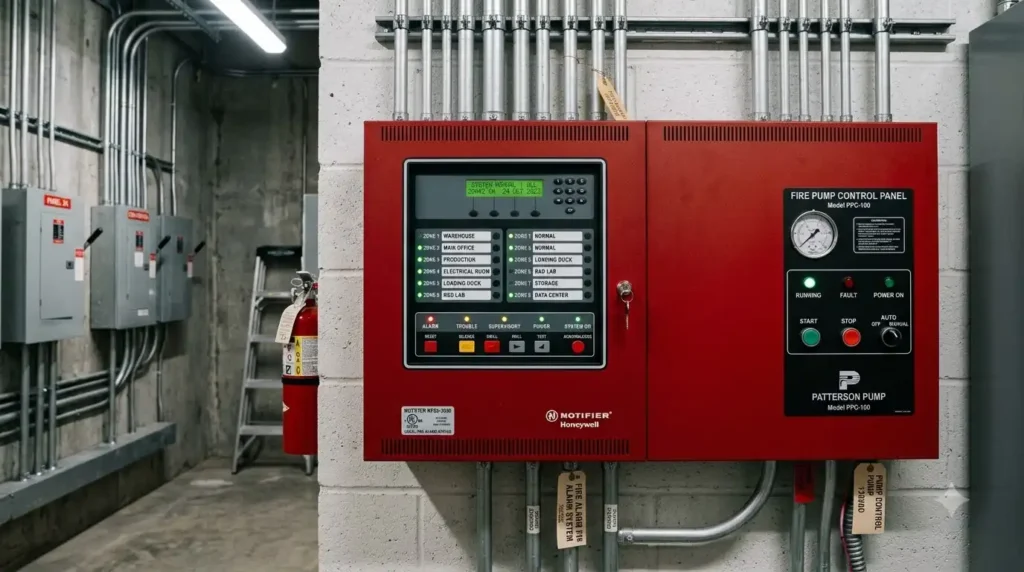
Smoke Alarm System Panel in Hyderabad: A Buyer's Guide for Facilities

Smoke alarm system panel in Hyderabad industrial facility fire fighting control panel installation

A fire doesn’t wait for a maintenance schedule. The gap between a smoke detector sensing trouble and a facility responding to it comes down almost entirely to the panel coordinating the system — and in an industrial or commercial building, that panel has to work correctly the very first time it’s called on, because there usually isn’t a second chance to get it right.

Facility managers, EPC contractors, and factory owners across Hyderabad often treat fire safety as a compliance checkbox rather than an engineering decision. This guide covers what a smoke alarm system panel in Hyderabad actually needs to do, the difference between panel types, and what to check before installing one in your facility.

What a Smoke Alarm System Panel Actually Does

The panel is the control center of the entire fire detection network. Smoke detectors, heat detectors, and manual pull stations all connect back to it, and the panel is responsible for interpreting those signals, triggering alarms, and — in more advanced systems — activating fire pumps, shutting down HVAC systems, or releasing fire doors.

A smoke alarm system panel in Hyderabad has to account for local building types, occupancy patterns, and in industrial settings, the specific hazards present on the floor — dust, chemical vapors, or high ambient heat that can all affect detector performance and panel configuration.

Conventional vs. Addressable Panels

Conventional Panels

Conventional systems wire detectors together in zones, so the panel tells you which zone triggered an alarm but not the exact detector. These work reasonably well for smaller facilities with straightforward layouts, where narrowing a fire down to one zone is enough information to respond quickly.

Addressable Panels

Addressable systems identify the exact device that triggered an alarm, which matters significantly in larger industrial facilities or multi-floor buildings where every minute spent searching for the source costs response time. Most new industrial installations in Hyderabad are moving toward addressable systems specifically for this reason, even though the upfront cost runs higher than conventional setups.

Where Smoke Alarm Panels Fit into a Facility's Fire Protection System

A smoke alarm panel rarely operates alone in an industrial setting. It typically works alongside:
  • Fire pump control systems, which activate water flow automatically when pressure drops or a fire is detected
  • Notification devices, including sounders and visual alarms that alert occupants
  • Building management integration, where the panel can trigger HVAC shutdown or door release to slow fire spread
  • Manual pull stations, giving occupants a way to trigger the alarm directly
SM Electricals builds Fire Fighting Panels that control and monitor this entire chain — from pump activation to alarm coordination — engineered specifically for the compliance and reliability standards industrial and commercial facilities in Hyderabad need to meet.

Key Factors to Check Before Installing a Smoke Alarm System Panel

1. Compliance with Local Fire Safety Codes

Hyderabad and Telangana facilities need to meet relevant National Building Code and fire safety compliance requirements, along with any sector-specific standards for pharma, food processing, or high-occupancy commercial buildings. Ask your provider to confirm the panel and system design meet current statutory requirements before installation, not after an inspection flags a gap.

2. Zone and Detector Coverage Planning

Detector placement and zone division should reflect your facility’s actual layout and hazard areas, not a generic template. A poorly zoned system either triggers false alarms constantly or fails to isolate the actual source quickly enough during a real event.

3. Integration with Fire Pump and Suppression Systems

If your facility has a fire pump or sprinkler system, the alarm panel needs to communicate with it directly. A standalone smoke alarm panel that doesn’t talk to your suppression system creates a dangerous gap between detection and response.

4. Backup Power Reliability

Fire alarm panels need to keep functioning through a power outage — arguably the exact scenario when a fire is most likely to go unnoticed. Confirm the panel includes reliable battery backup with sufficient runtime, and that it’s tested regularly, not just installed once and forgotten.

5. Scalability for Facility Growth

If your facility plans to expand, choose a panel architecture that allows adding zones or detectors without a full system replacement. Addressable systems generally handle this better than conventional ones.

6. Maintenance and Testing Schedule

A smoke alarm system panel needs periodic testing — detector sensitivity checks, battery testing, and functional alarm tests — to stay reliable. Confirm what maintenance schedule your provider recommends and whether they offer ongoing service contracts.

Benefits of a Properly Engineered Smoke Alarm System

  • Faster detection and response during an actual fire event
  • Reduced false alarm frequency when zones and detector types are matched to the environment
  • Simplified compliance during statutory fire safety inspections
  • Better coordination with suppression systems, reducing property damage
  • Lower long-term cost from avoiding a full system replacement due to poor initial scalability planning

Common Mistakes Facilities Make

  1. Treating the panel as a one-time compliance purchase — without ongoing testing, even a well-installed system degrades in reliability over time.
  2. Choosing conventional panels for large or complex facilities — the lack of exact device identification slows response time when it matters most.
  3. Skipping integration with fire pump systems — a smoke detection system that can’t trigger suppression automatically loses critical response time.
  4. Underestimating detector placement planning — poor zoning leads to either false alarms or blind spots, both of which erode confidence in the system.
  5. Ignoring backup power testing — a battery that hasn’t been tested in months may not perform when the panel actually needs it.

Expert Tips for Facility Managers

  • Request a documented zone map from your provider showing exactly which detectors cover which areas of your facility.
  • Ask specifically whether the panel integrates with your existing fire pump or suppression system before installation begins.
  • Schedule quarterly testing at minimum, and keep a written maintenance log for compliance audits.
  • Choose addressable panels for any facility with multiple floors or complex layouts, even if the upfront cost is higher.
  • Confirm training is provided for your facility staff on how to interpret panel alerts and respond correctly.

Why Choose SM Electricals

SM Electricals designs and manufactures Fire Fighting Panels engineered for reliable pump activation and alarm coordination, built to the compliance standards industrial and commercial facilities across Hyderabad and Andhra Pradesh need to meet. Operating from Jeedimetla under CEO Mr. Saisudha Pamidimarri, the team configures panels based on actual pump capacity and site safety requirements rather than a fixed template.

Facilities working with SM Electricals get panels engineered for their specific hazard profile, along with installation and commissioning support to ensure the system integrates correctly with existing fire protection infrastructure. You can review the complete service range or see past work in the gallery before requesting a quote.

Latest Trends in Fire Alarm Panel Technology

  • Addressable systems becoming standard in new industrial construction, even for mid-sized facilities, due to faster fault location
  • Remote monitoring integration, allowing facility managers to check panel status without a physical site visit
  • Tighter compliance documentation requirements, with more insurers and auditors expecting written testing logs, not verbal confirmation
  • Panel integration with building management systems, coordinating HVAC shutdown and door release automatically during an alarm event
  • Modular panel expansion, letting facilities add zones as they grow without replacing the entire control panel

Questions

A smoke alarm is the individual detector sensing smoke; the panel is the central controller that receives signals from all detectors, triggers alarms, and can activate connected systems like fire pumps.
Larger or multi-floor facilities benefit from addressable panels for exact fault location, while smaller, simpler layouts can often work adequately with conventional zoned systems.
Quarterly functional testing is a reasonable minimum for industrial facilities, with battery and detector sensitivity checks included in the schedule.
Yes, a properly engineered panel should communicate directly with fire pump controls to trigger automatic activation during a detected fire event.
Facilities need to meet relevant National Building Code fire safety requirements along with any sector-specific standards applicable to their industry and occupancy type.
Timelines depend on facility size and zone complexity — a detailed project schedule should come from your provider after a site assessment.
A properly installed panel includes tested battery backup designed to keep the system functioning through a power outage.
Yes, SM Electricals supports installation, commissioning, and ongoing maintenance to keep fire protection systems reliable over time.

Conclusion

A smoke alarm system panel in Hyderabad isn’t just a compliance requirement — it’s the component that determines how fast your facility actually responds when it matters. Choose panel architecture based on your facility’s real layout and hazard profile, confirm integration with suppression systems, and commit to a testing schedule that keeps the system reliable long after installation.

Call-To-Action

Need a fire alarm and pump control system engineered for your facility’s actual layout? Contact SM Electricals for a site assessment, or explore the Fire Fighting Panel range and more engineering guides on the blog.
Call Now Button