Industrial Electrical Solutions in Hyderabad: A Complete Guide for Plant Owners

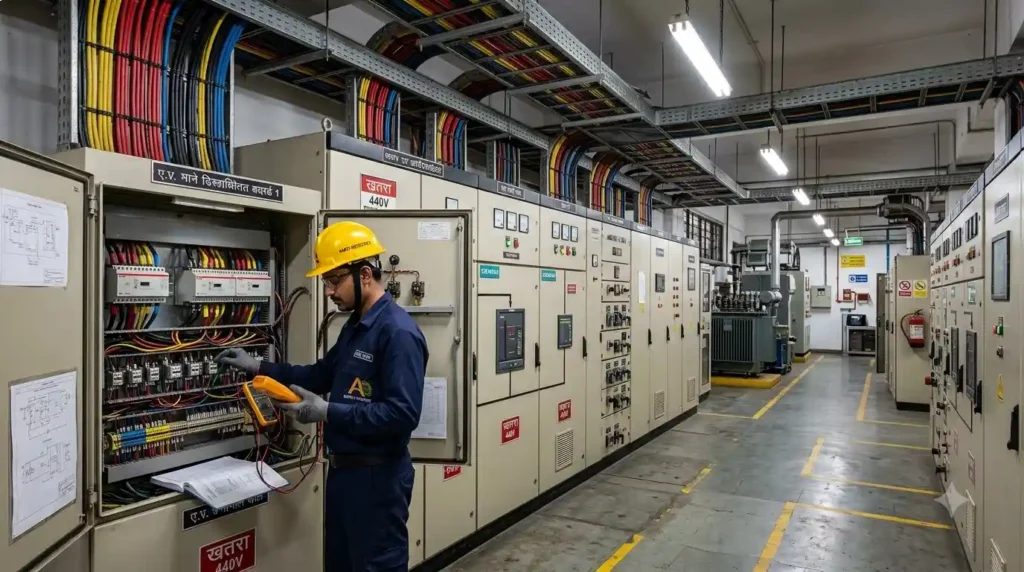
Industrial Electrical Solutions in Hyderabad technician inspecting control panels and power distribution systems at a factory

A factory’s electrical system is never just one thing. It’s the incoming power distribution, the motor control feeding every machine, the automation logic sequencing production, the backup power keeping things running through an outage, and the maintenance program that catches a failing relay before it becomes a shutdown. Providers offering genuine Industrial Electrical Solutions in Hyderabad handle this whole system as one coordinated project, not a series of disconnected purchases from different vendors.

This guide breaks down what falls under industrial electrical solutions, which industries in Hyderabad rely on them most, and what separates a full-service provider from one that only sells equipment.

What "Industrial Electrical Solutions" Actually Covers

The phrase gets used loosely in the market, so it’s worth being specific. A genuine provider of Industrial Electrical Solutions in Hyderabad typically covers:

  • Electrical design and load engineering — single-line diagrams, load calculations, and protection coordination for new or expanding facilities
  • Control panel manufacturing — PCC, MCC, APFC, PLC automation, ATS, AMF, and relay panels built to the facility’s actual load
  • Power distribution planning — sizing cables, busbars, and switchgear across the plant
  • Automation integration — PLC-based control for process sequencing, interlocks, and monitoring
  • Power quality management — power factor correction and load balancing to reduce tariff penalties
  • Installation and commissioning — on-site work to bring the designed system online safely
  • Maintenance and support — scheduled inspection, thermal scanning, and breakdown response

A vendor offering only one or two of these isn’t providing a solution — they’re supplying a component. The distinction matters when something goes wrong and you need one accountable team, not three vendors pointing at each other.

Why Hyderabad's Industrial Sector Needs Integrated Solutions

Hyderabad’s industrial zones — Jeedimetla, Kompally, Balanagar, Patancheru, and the growing corridors around the outer ring road — host a mix of pharmaceutical units, food processing plants, engineering workshops, and infrastructure projects. Each of these has different electrical demands, but they share a common problem: fragmented sourcing.

A plant that buys panels from one vendor, hires a separate contractor for installation, and calls yet another company for maintenance ends up with a system nobody fully understands end to end. When a fault occurs, each vendor can plausibly blame another’s work. Integrated Industrial Electrical Solutions in Hyderabad remove that ambiguity — one team designs, builds, installs, and maintains, so accountability doesn’t get lost between contracts.

Core Components of a Complete Industrial Electrical Solution

Design and Engineering

Everything starts with accurate load data and a properly engineered single-line diagram. Skipping rigorous design work at this stage is the single biggest cause of electrical problems that show up months after commissioning — undersized busbars, inadequate protection coordination, or panels with no room for future expansion.

Control and Distribution Panels

This is the physical backbone of the system. PCC Panels manage incoming power distribution, MCC Panels handle motor control, and Control Relay Panels protect switchgear from fault conditions. Facilities running continuous processes typically need all three working together as a coordinated system, not standalone purchases.

Automation

PLC Automation Panels turn manual switching into repeatable, monitored process control — increasingly standard across Hyderabad’s pharma and food-processing sectors, where consistency directly affects product quality.

Power Continuity

ATS Panels and AMF Panels handle automatic switchover to generator backup during a mains failure, a near-essential specification given how often industrial zones experience grid fluctuations.

Power Quality and Efficiency

An APFC Panel corrects power factor and reduces the penalty charges that show up on TSSPDCL industrial bills — often one of the fastest-paying investments a facility can make.

Maintenance and Support

A solution isn’t complete once the system is commissioned. Ongoing thermal scanning, connection tightness checks, and relay calibration catch developing faults before they cause downtime — this is the part of “solutions” that pure equipment suppliers rarely offer.

How to Evaluate a Provider of Industrial Electrical Solutions in Hyderabad

  1. Ask what’s actually included — get specifics on design, fabrication, installation, and maintenance rather than accepting “full solutions” as a vague marketing phrase.
  2. Check in-house engineering capability — a provider who designs internally, rather than outsourcing drawings, controls quality more consistently.
  3. Request references across project types — a company experienced in pharma-sector projects may not have the same depth in food processing or infrastructure work.
  4. Confirm response time for breakdowns — ask specifically how fast they can reach your site, not just whether they offer “support.”
  5. Review documentation practices — factory test reports, compliance certificates, and maintenance logs should be standard, not something you have to request repeatedly.
  6. Understand pricing structure — clarify whether design, panels, installation, and maintenance are priced separately or bundled, so you can compare providers accurately.

Benefits of Choosing an Integrated Provider

  • One point of accountability across design, fabrication, and maintenance
  • Faster fault diagnosis, since the same team that built the system also services it
  • Reduced coordination overhead during multi-phase projects
  • Consistent documentation across the entire electrical system
  • Easier long-term expansion planning, since one provider already understands your facility

Why Choose SM Electricals

SM Electricals delivers Industrial Electrical Solutions in Hyderabad as a coordinated service rather than a parts catalog. Based in Jeedimetla under the leadership of CEO Mr. Saisudha Pamidimarri, the team handles design, panel manufacturing, installation, and after-sales support for factories, EPC contractors, and infrastructure developers across Hyderabad, Telangana, and Andhra Pradesh.

From load calculations through factory-tested PCC, MCC, APFC, PLC automation, ATS, AMF, and control relay panels, SM Electricals keeps a single team responsible for the whole system, which is exactly the kind of accountability this guide recommends looking for. You can review completed installations in the gallery or explore the full service range before requesting a quote.

Latest Trends in Industrial Electrical Solutions

  • Bundled maintenance contracts — more facilities are pairing installation with ongoing service agreements instead of calling a technician only after something breaks
  • Remote monitoring integration — IoT sensors added to panels give plant teams visibility into load and fault conditions without a physical inspection
  • Energy audits as a standard offering — providers increasingly pair power factor correction with a broader review of where a facility is losing efficiency
  • Modular system design — designing panels and distribution layouts that can expand in phases as production scales
  • Tighter compliance documentation — statutory audits are pushing providers to formalize test and inspection records across the entire installed system

Common Mistakes Buyers Make

  1. Sourcing components from multiple vendors — it seems cost-effective initially but creates accountability gaps when something fails.
  2. Treating maintenance as optional — skipping scheduled service until a breakdown happens costs far more than a maintenance contract would have.
  3. Choosing a provider without in-house design capability — outsourced engineering often means slower revisions and inconsistent documentation.
  4. Ignoring power quality until the electricity bill spikes — power factor issues are cheaper to fix proactively than to absorb as an ongoing penalty.
  5. Not verifying compliance documentation upfront — assuming certifications instead of requesting them causes problems during statutory inspections later.

Expert Tips for Facility Owners

  • Ask a prospective provider to walk through a past project end to end — design, fabrication, installation, and a maintenance visit — to gauge how integrated their process really is.
  • Budget for a maintenance contract as part of your initial project cost, not as a separate future decision.
  • Request an energy audit alongside any new panel installation to catch power-quality issues early.
  • Keep design drawings, test reports, and maintenance logs in one file — you’ll need them for future expansion or resale of the facility.
  • Revisit your electrical system’s capacity every time production volume changes meaningfully, not just when something fails.

Questions

It typically includes design and load engineering, control panel manufacturing, power distribution planning, automation integration, power quality management, installation, and ongoing maintenance.
It's not mandatory, but working with one integrated provider reduces coordination issues and keeps accountability clear when something needs troubleshooting.
Cost depends on facility size, panel complexity, and whether maintenance is bundled into the contract. A detailed quote based on your actual load data gives a far more accurate figure than a generic estimate.
Standard maintenance covers thermal scanning, connection tightness checks, insulation resistance testing, and relay calibration on a scheduled basis.
Yes. These sectors often need specific automation logic, enclosure ratings, and documentation standards that an experienced provider will design around.
If your industrial electricity bill includes a power-factor penalty, an APFC panel typically pays for itself within a reasonable timeframe by eliminating that charge.
Look for compliance with relevant IS/IEC standards, proper enclosure IP-rating documentation, and factory test reports for any panels supplied.
Yes, SM Electricals supports both new facility projects and upgrades or expansions to existing electrical systems across Hyderabad and the surrounding region.

Conclusion

Industrial Electrical Solutions in Hyderabad work best when treated as one coordinated system rather than a collection of separate purchases. Design quality, panel reliability, and ongoing maintenance all connect to the same outcome — a facility that runs without unplanned downtime. Evaluate providers on how well they integrate these pieces, not just on the price of a single panel.

Call-To-Action

Looking for a single team to handle your facility’s electrical design, panels, and maintenance? Get in touch with SM Electricals for a consultation based on your actual site requirements, or explore the complete service range and more engineering insights on the blog.
Call Now Button